
Trenchless pipeline laying
Innovating in infrastructure development
Trenchless pipe-laying technology, piping
Trenchless pipe laying is a general name for all trenchless methods. Closed-loop methods are the most promising from an economic point of view.
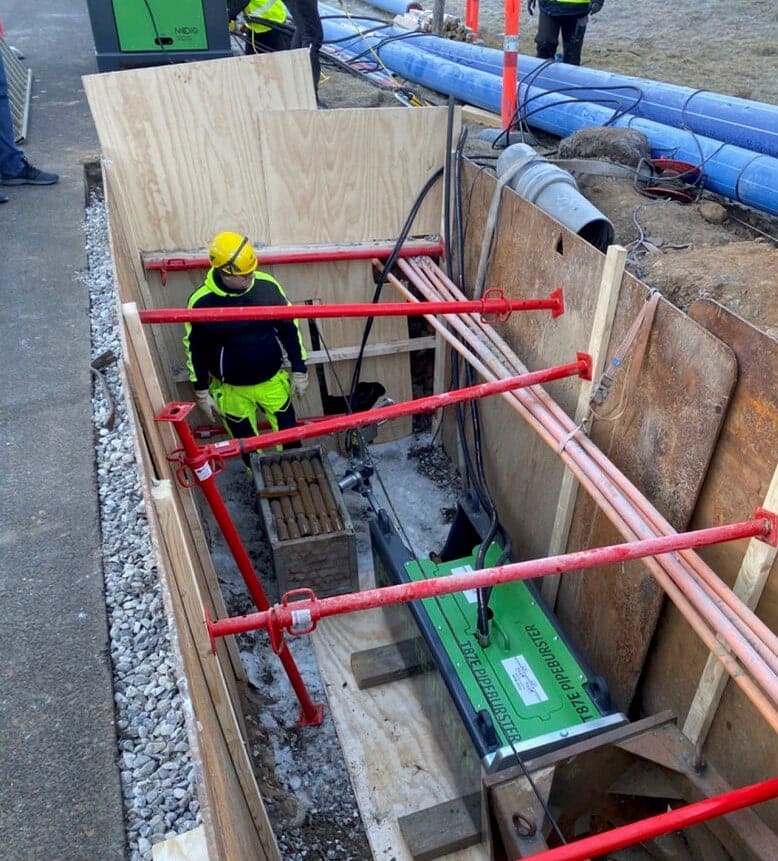
The process of pipe laying consists of complex, labor-intensive work and must be carried out in strict compliance with existing technical standards.
Before starting to install the pipeline, it is necessary to perform a whole range of activities – to conduct a soil survey, to develop a plan for laying communications, to coordinate the work in the necessary authorities, to prepare the working site for the selected method of pipe installation.
The most common methods of closed laying are:
1. Horizontal directional drilling involves installing pipes in a pre-prepared well. A drilling rig and auxiliary equipment (locating system, drilling mud mixing system, welding machines for pipe joints) are used to perform the work.
2. The controlled bore method is used for trenchless laying of pipelines in soft soils. This method involves making a hole for a new pipe by compacting the soil and is accomplished with the help of a controlled boring machine.
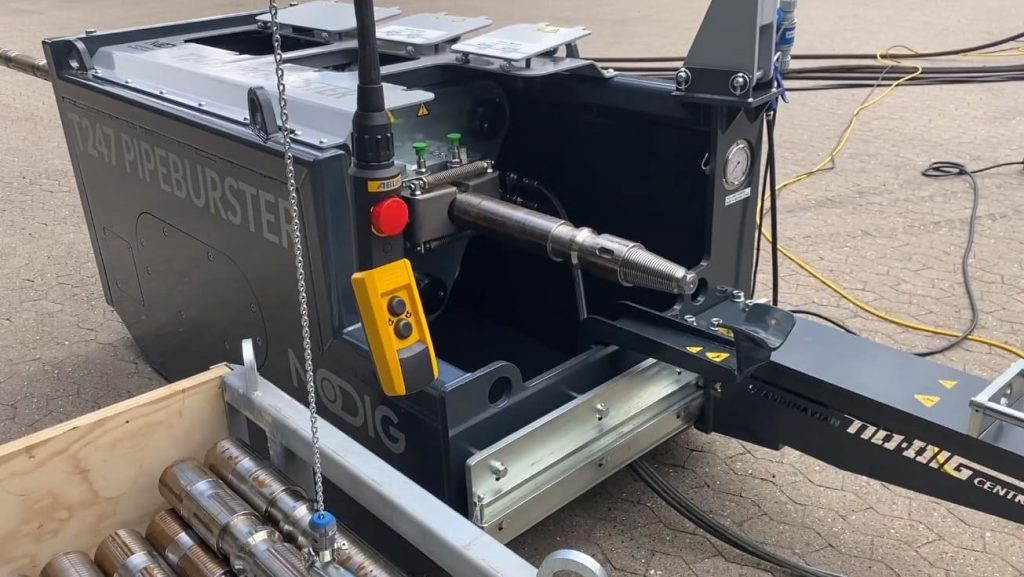
3 The destruction method involves installing a new pipeline in the place of worn-out communications without removing the old pipes. Special equipment is used here – a hydraulic destroyer, which cuts, destroys the old pipeline, presses its fragments into the tunnel walls with simultaneous pulling of the new pipe.
The most universal method of trenchless utility installation is the horizontal directional drilling method. An example is shown in the video.
Unlike other trenchless methods, this technology allows laying polyethylene and steel pipes.
The technology of trenchless pipe laying and the specific method of work is determined at the construction site in the presence of working drawings, since the methods are in many cases interchangeable.
ADVANTAGES OF TRENCHLESS PIPE LAYING
Work can be carried out in hard-to-reach places at any time of year.
Material and labor costs are lower, often significantly lower than for trench installation.
The entire complex of works is carried out in a short time.
After pipe laying is completed, there is no need to restore roads and natural landscape. Almost no landscaping is required.
APPLICATION AREAS
The following types of utilities are installed using the trenchless method:
- gas pipelines;
- power cable lines;
- telephone and fiber optic networks.
- water pipelines;
- sewerage;
All equipment – drilling rigs, hydraulic breakers, controlled piercing, pneumatic hammers, penetrators, locating systems – are highly reliable and suitable for the most difficult works.
Advantages of trenchless pipe laying methods
Trenchless pipe laying includes the following advantages:
- Significant reduction in the amount of excavation work
- Less equipment and labor involved, as only one drilling rig and two crews of workers are used;
- Reduction of total financial costs up to 30%;
- Reduction of construction time from 2 to 10 times;
- Minimal risk of emergency situations;
- Unaffected ecology and landscape;
- No disruption of traffic, preservation of the road surface;
- Minimal coordination with environmental organizations.
That is why trenchless technology of laying pipes, pipelines and communications is cost-effective, extremely efficient and in some cases irreplaceable.